
Shoulder Stabilization Surgery Dubai: Stop Recurrent Dislocations Permanently
Arthroscopic Bankart Repair & Advanced Stabilization | Same-Day Surgery | 85-95% Success
Recurrent shoulder dislocations rob you of confidence, limit your activities, and damage your joint with every episode. Shoulder stabilization surgery performed arthroscopically by Dr. Usama Saleh repairs the torn labrum and tightens stretched ligaments to restore permanent shoulder stability. As Dubai’s fellowship-trained shoulder specialist with 23+ years of experience, Dr. Usama specializes in arthroscopic Bankart repair, Latarjet procedure for bone loss cases, and capsular shift for multidirectional instability.
What Is Shoulder Stabilization Surgery?
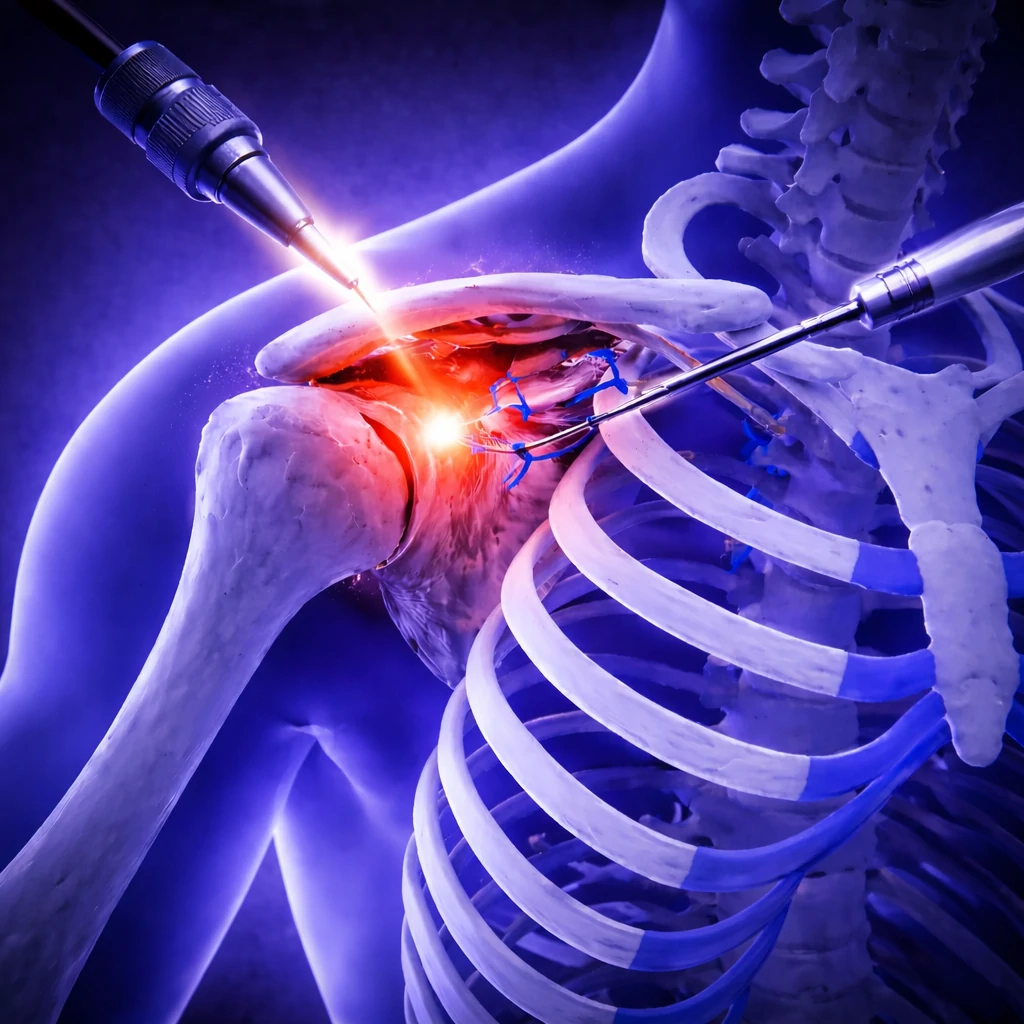
Shoulder stabilization surgery is a procedure that repairs the damaged structures causing recurrent shoulder dislocations or chronic instability. When the labrum (cartilage rim), ligaments, and joint capsule are torn or stretched from repeated dislocations, the shoulder loses its mechanical stability, the ball slips out of the socket too easily. Arthroscopic shoulder stabilization repairs these structures, reattaching the torn labrum to the glenoid rim, tightening stretched ligaments, and restoring the anatomic barriers that keep the shoulder stable during movement.
Dr. Usama Saleh performs several stabilization techniques depending on your specific instability pattern and structural damage: Arthroscopic Bankart Repair (most common—reattaches torn anterior labrum using suture anchors), Latarjet procedure (transfers bone from coracoid to glenoid for significant bone loss cases, 90-95% success even in difficult cases), Remplissage (fills the Hill-Sachs bone defect on the humeral head to prevent engagement), and Capsular Shift (tightens overstretched capsule for multidirectional instability). The right bankart repair technique is determined by your specific MRI findings, bone loss percentage, direction of instability, and activity demands.
When Is Shoulder Stabilization Surgery Needed?
Not every shoulder dislocation requires surgery. Dr. Usama evaluates each patient comprehensively before recommending surgical stabilization. When is shoulder stabilization needed depends on age, injury mechanism, structural damage, activity level, and recurrence risk.
Surgery Typically Recommended When:
Recurrent shoulder dislocations (2+ episodes) · First-time dislocation in young athletes under 25 · Significant labral tear (Bankart lesion) on MRI · Glenoid bone loss >20-25% requiring Latarjet procedure · Chronic apprehension severely limiting activities · Failed 3-6 months conservative treatment · High recurrence risk profile (young age, contact sports, traumatic mechanism)
Surgery May NOT Be Needed When:
First-time dislocation in adults over 35 with lower demands · Atraumatic multidirectional instability responding to therapy · Very first treatment attempt (therapy should be tried) · Patient preference to avoid surgery with tolerable symptoms · Medical conditions making surgery high-risk
Preparation Before Shoulder Stabilization Surgery
Proper preparation optimizes your surgical outcome and shoulder stabilization recovery time. Dr. Usama’s team guides you through every pre-operative step.
Home preparation: arrange overnight helper, set up reclined sleeping area (cannot lie flat 4-6 weeks), prepare button-front shirts, stock easy-to-prepare meals. Sleeping after shoulder stabilization surgery requires proper preparation.
Benefits of Rotator Cuff Repair Surgery
Step 3 Labral Mobilization & Bone Preparation (15-20 min)
Torn labrum mobilized from scar tissue. Glenoid rim bone surface prepared, roughened to create bleeding surface promoting biological healing. Number and position of suture anchors determined. Critical for successful arthroscopic Bankart repair.
Step 5 Additional Procedures If Needed (10-30 min)
Remplissage: posterior capsule sutured into Hill-Sachs defect if large. Latarjet procedure: coracoid bone transferred to anterior glenoid if bone loss >20-25%. Capsular shift: capsule tightened all directions for multidirectional instability. All pathology treated in single surgery.
Arthroscopic Bankart Repair
60–90 minutes
Bankart + Remplissage
90–120 minutes
Latarjet / Revision
120-180 minutes
Benefits Of Shoulder Stabilization Surgery
Permanent Shoulder Stability
85-95% achieve permanent shoulder stability after arthroscopic Bankart repair, no more dislocations, no more apprehension. Shoulder stabilization surgery success rate for primary repairs with minimal bone loss: 90-95%. Even Latarjet procedure for difficult bone loss cases: 90-95% success.
Return to Sport and Work
Return to sport after shoulder stabilization: 85-95% of athletes return to pre-injury level. Contact sports cleared 6-9 months. Return to work: desk jobs 1-2 weeks, manual labor 3-6 months. Full confident activity without worry.
Prevention of Progressive Damage
Each dislocation causes more labral damage, cartilage injury, and bone loss. Early shoulder dislocation surgery stops this destructive cycle before irreversible arthritis develops. Protecting your joint for decades.
Minimally Invasive Arthroscopic
Arthroscopic shoulder surgery instability through tiny incisions delivers: significantly less pain, same-day discharge (no hospital stay), faster return to activities, minimal scarring, lower infection risk, preserved muscle.
Risks & Possible Complications
Dr. Usama believes in complete transparency about shoulder stabilization surgery complications. Overall serious complication rate: less than 5% for arthroscopic stabilization by experienced surgeons.
Recurrent Instability / Re-Dislocation (5-15%)
Shoulder may dislocate again after surgery. Recurrence after shoulder stabilization lower with proper technique, adequate bone stock, good tissue quality, patient compliance. Risk higher with bone loss >20%, revision surgery, contact sport, non-compliance. Latarjet procedure has lowest recurrence rate (5-10%).
Stiffness and Loss of Motion (10-20%)
Some motion loss common especially external rotation (10-15 degrees typical). Most find acceptable trade-off for stability. Excessive stiffness 5-10%, more common in diabetics. Prevented through early physical therapy after bankart repair.
Infection (<1%)
Rare with arthroscopic technique. Minimized through sterile surgical technique, prophylactic antibiotics, antibacterial skin preparation. Treated with antibiotics.
How Dr. Usama Minimizes Risks
Careful patient selection · Meticulous arthroscopic technique from 23+ years fellowship training · Pre-op smoking cessation and diabetes optimization · Structured rehab with experienced therapists · Close post-op monitoring
Recovery & Rehabilitation
Shoulder stabilization surgery recovery follows a structured 4-phase protocol. Shoulder stabilization recovery time depends on surgical technique, tissue quality, compliance, and activity goals. Bankart surgery recovery time for complete strength return: 6-12 months.
Recovery & Healing Time
Activity |
Return Timeline |
Notes |
|---|---|---|
Desk / office work
|
1-2 weeks
|
As soon as pain allows
|
Driving after shoulder stabilization
|
6-8 weeks
|
Out of sling, off narcotics, full arm control
|
Light manual labor
|
3-4 months
|
Progressing strength required
|
Swimming
|
4-5 months
|
Excellent rehab activity
|
Golf / Tennis
|
4-6 months
|
Overhead motion fully restored
|
Contact sports (rugby, football, martial arts)
|
6-9 months
|
Return to sport after shoulder stabilization cleared
|
Full unrestricted activity
|
6-12 months
|
How long is shoulder stabilization surgery recovery: complete by 12 months
|
Why Choose Dr. Usama
For Shoulder Stabilization Surgery In Dubai
Best Shoulder Doctor Dubai — Fellowship-Trained
23+ Years as Dubai's Shoulder Specialist Doctor
Expert in How to Treat Rotator Cuff Tear — All Options
Honest — Surgery Only When Truly Needed
Frequently asked questions
Need something cleared up? Here are our most frequently asked questions.
Shoulder stabilization surgery success rate depends on technique and patient factors. Arthroscopic Bankart repair for primary instability with minimal bone loss: 90-95% success preventing future dislocations. Bankart repair with Remplissage for Hill-Sachs defects: 85-90%. Latarjet procedure for significant glenoid bone loss (>20-25%): 90-95% even in difficult cases. Capsular shift for multidirectional instability: 70-85%. Revision surgery after failed prior repair: 75-85%. Dr. Usama's fellowship training and experience consistently achieve outcomes at the higher end of these published success ranges. Factors improving success: good bone stock, proper surgical technique, patient compliance with rehabilitation, no premature return to sport
Shoulder stabilization recovery time follows a 4-phase protocol over 6-9 months for full return to contact sports. Sling for 4-6 weeks continuously. Desk work return: 1-2 weeks. Driving after shoulder stabilization: 6-8 weeks. Light manual labor: 3-4 months. Swimming and overhead activities: 4-5 months. Contact sports and full unrestricted activity: 6-9 months. Bankart surgery recovery time for complete strength return: 6-12 months depending on surgical complexity and your activity demands. How long is shoulder stabilization surgery itself? Procedure duration: 60-120 minutes depending on technique. Total time at surgical center: 3-4 hours including preparation and recovery before same-day discharge.
Bankart repair surgery reattaches the torn labrum (Bankart lesion) to the glenoid rim using suture anchors, this restores the soft tissue bumper preventing dislocation. Arthroscopic Bankart repair is the gold standard for primary instability with minimal bone loss (<20%). Success rate: 90-95%. Latarjet procedure transfers bone from the coracoid process to the front of the glenoid socket, adding bony support where significant bone loss (>20-25%) has occurred from repeated dislocations. The transferred bone acts as both a structural block and provides surface area for labral reattachment. Latarjet achieves 90-95% success even with significant bone loss where Bankart repair alone would fail. Dr. Usama determines which technique you need based on CT 3D reconstruction measuring exact bone loss percentage.
Yes. Return to sport after shoulder stabilization is achievable for 85-95% of athletes at pre-injury competition level. Timeline: non-contact sports (swimming, golf, tennis) 4-6 months; contact sports (rugby, football, martial arts, hockey) 6-9 months. Return clearance requires: 90%+ strength symmetry measured objectively vs opposite shoulder, full range of motion restoration, passing functional sport-specific tests, psychological readiness and confidence, and Dr. Usama's clinical clearance. Professional athletes across Dubai and UAE return to competition after shoulder dislocation surgery with proper rehabilitation. The key is patience, returning too early significantly increases re-dislocation risk. Physical therapy after bankart repair must be completed fully before sport clearance.
Yes, for most cases. Arthroscopic shoulder stabilization delivers equal or superior outcomes to open surgery with significant advantages: same 90-95% success rates for primary repairs, less post-operative pain, same-day discharge (no hospital stay), faster return to activities, minimal scarring (3-4 tiny incisions vs 6-8 inch open incision), lower infection risk, and preserved muscle (no deltoid detachment needed). Open surgery still appropriate for: massive bone loss (Latarjet procedure traditionally open, though Dr. Usama performs arthroscopic-assisted), failed multiple prior arthroscopic repairs, severe capsular stretching requiring extensive plication. Dr. Usama performs 95%+ of shoulder dislocation surgery cases arthroscopically, reserving open surgery only for cases where arthroscopic technique is insufficient.
Shoulder stabilization surgery cost in Dubai varies based on surgical technique and facility. Arthroscopic Bankart repair: AED 35,000-55,000. Bankart with Remplissage: AED 40,000-60,000. Latarjet procedure: AED 50,000-70,000. Revision surgery: AED 45,000-65,000. These estimates include surgeon fees, facility fees, anesthesia, and initial post-operative visits. Most major UAE insurance plans cover medically necessary shoulder stabilization surgery Dubai procedures—our team verifies your specific coverage and obtains pre-authorization before surgery so you know exactly what you'll pay. Bankart repair Dubai cost with insurance: typically AED 0-5,000 out-of-pocket depending on your plan.
Related Conditions & Procedures
Related Conditions
Shoulder Instability Treatment, full condition overview including conservative management [link]Rotator Cuff Tear Treatment, can occur with traumatic dislocation [link]Shoulder Impingement Relief, may coexist [link]Shoulder Treatment Dubai, comprehensive hub [link]
Related Procedures
Latarjet Procedure, bone augmentation for glenoid bone loss [link if separate page]Shoulder Arthroscopy, minimally invasive technique overview [link]Rotator Cuff Repair Surgery, if torn simultaneously [link]
Take control of your health, mobility, and quality of life.
Your First Step Toward a Stronger Tomorrow Starts Now:
Book your personal consultation with Dr. Usama Saleh today and begin your journey to a better you.
Thank you — your message was sent.
