
Shoulder Impingement Relief: Stop Pain & Restore Movement
Persistent shoulder pain with overhead activities, painful arc when lifting your arm, and nagging discomfort that disrupts sleep these are the hallmark signs of shoulder impingement syndrome. This common condition occurs when the rotator cuff tendons and bursa are pinched in the narrow subacromial space between your arm bone and shoulder blade, causing inflammation, pain, and progressive weakness. Dr. Usama Saleh, Dubai’s fellowship-trained shoulder specialist with 23+ years of experience, provides comprehensive shoulder impingement treatment starting with conservative care physical therapy, targeted shoulder impingement exercises, and anti-inflammatory injections achieving excellent relief for 70-80% of patients.
Understanding Shoulder Impingement
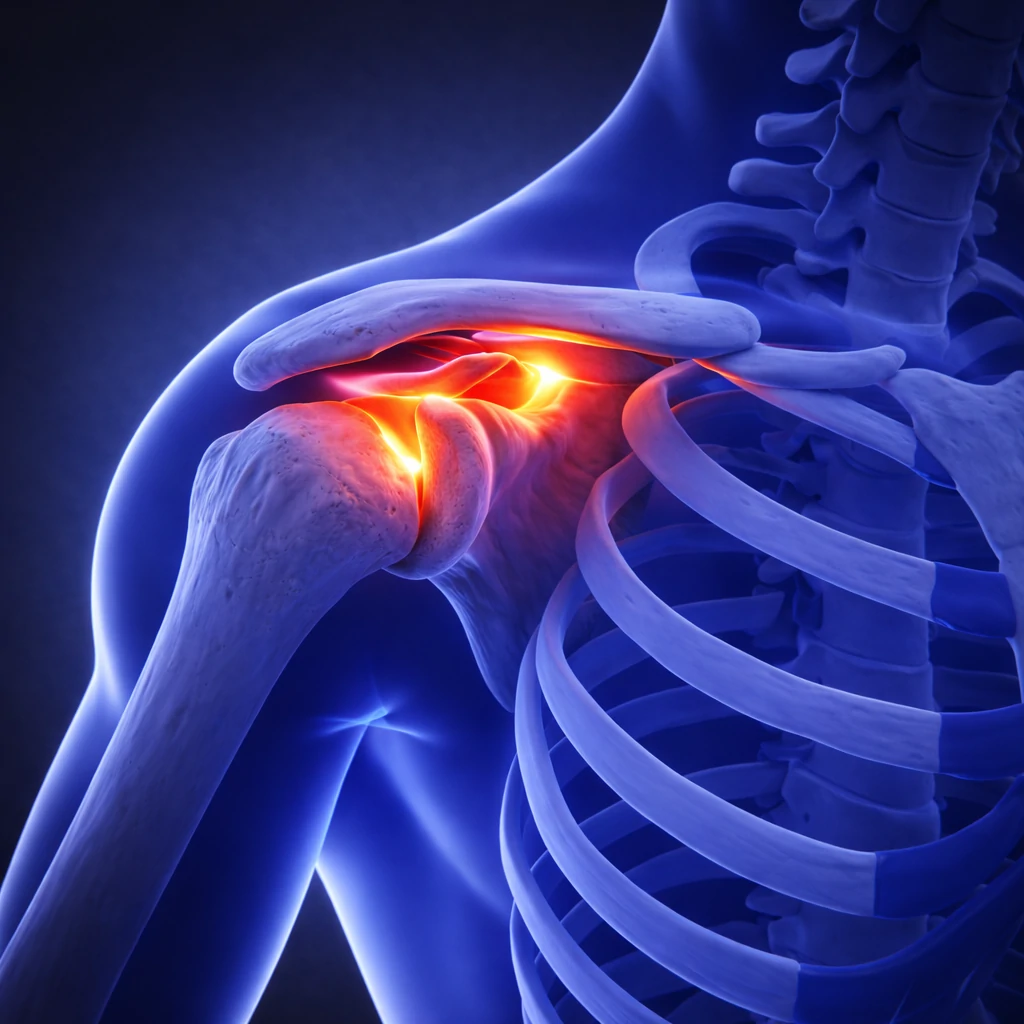
Shoulder impingement syndrome also called subacromial impingement occurs when the rotator cuff tendons (primarily the supraspinatus tendon) and the subacromial bursa are repeatedly compressed in the narrow space beneath the acromion (the bony roof of the shoulder). This mechanical pinching happens during arm elevation, particularly between 60-120 degrees (the ‘painful arc’). The repeated compression causes tendon inflammation (tendinitis), bursa inflammation (subacromial bursitis), and progressive tendon degeneration if left untreated.
The subacromial space narrows due to: bone spurs on the underside of the acromion (most common in adults over 40), thickened inflamed bursa taking up space, rotator cuff tendon swelling from overuse, poor posture causing altered shoulder mechanics, rotator cuff weakness allowing humeral head to migrate upward. What causes shoulder impingement? Usually a combination of anatomic factors (bone spur shoulder shape, acromion anatomy) and mechanical factors (poor technique, muscle imbalance, overuse).
Shoulder Impingement Symptoms
Recognizing shoulder impingement symptoms early leads to better outcomes. The condition presents differently in acute vs chronic cases:
Primary Shoulder Impingement Symptoms
Painful arc shoulder, sharp pain when lifting arm between 60-120 degrees overhead · Shoulder impingement pain, deep aching in front and side of shoulder · Night pain, worsening pain lying on affected shoulder disrupting sleep · Weakness, difficulty lifting objects overhead or reaching behind back · Catching sensation, clicking or grinding with arm movement · Shoulder pain impingement radiating down upper arm
Acute vs Chronic Presentation
Acute: sudden onset after unaccustomed overhead activity (painting, swimming, throwing). Symptoms improve with rest. Responds well to conservative treatment. Chronic: gradual onset over months. Progressive worsening despite rest. Usually associated with bone spurs or rotator cuff degeneration. May require surgical intervention if conservative fails.
Red flag symptoms requiring immediate evaluation: sudden complete loss of arm strength after injury (possible rotator cuff tear), severe pain with minimal movement (possible calcific tendinitis), symptoms not improving after 6-8 weeks conservative treatment, progressive weakness despite therapy.
What Causes Shoulder Impingement?
Risk factors: age over 40, overhead occupation or sport, previous shoulder injury, poor posture, rotator cuff weakness, smoking (impairs tendon healing), repetitive overhead activities.
Rotator Cuff & Bursa Inflammation
Rotator cuff impingement from overuse repetitive overhead activity causes tendon inflammation and swelling. Shoulder bursitis and subacromial bursitis inflamed bursa takes up space worsening impingement. These create vicious cycle. Reversible with rest, therapy, anti-inflammatory treatment if caught early.

Years of Experience
How Is Shoulder Instability Diagnosed?
Clinical Examination
Dr. Usama performs shoulder impingement test procedures: Neer test (passive arm elevation reproduces pain), Hawkins test (internal rotation at 90 degrees reproduces pain), Painful arc test (pain between 60-120 degrees), Jobe test (empty can test assesses supraspinatus), Drop arm test (inability to lower arm suggests tear). How to diagnose shoulder impingement: these tests have 75-90% sensitivity.
Imaging Studies
X-rays: show bone spur shoulder, AC joint arthritis, acromion shape, calcific deposits. Essential first imaging. MRI: gold standard showing rotator cuff tendon health, bursa thickness, tears, muscle atrophy, tendon degeneration. Guides treatment. Ultrasound: dynamic assessment of tendon gliding, good for diagnosing tears, can guide injections. Diagnostic injection test: subacromial lidocaine, if pain improves, confirms impingement diagnosis.
MD, PhD, MRCS (UK), Fellowship-Trained (Canada)
Global Expertise.
Local Heart
Board certified in orthopedics surgery
Treatment Options For Shoulder Impingement
How to treat shoulder impingement depends on severity, duration, structural factors, and response to initial care. Dr. Usama’s approach: conservative shoulder impingement treatment first for 3-6 months (successful in 70-80% of cases), surgical intervention only when conservative care fails or structural bone spurs cause mechanical impingement.
Conservative Treatment (First-Line)
Shoulder impingement physical therapy: 12-16 week program focusing on rotator cuff strengthening, scapular stabilization, posterior capsule stretching, posture correction. Success rate: 70-80%. Corticosteroid subacromial injection: reduces bursa inflammation, provides 6-12 weeks relief allowing effective therapy. Can repeat 2-3 times. NSAIDs short-term 7-14 days. Activity modification temporarily.
Surgical Treatment (When Conservative Fails)
Arthroscopic subacromial decompression: removes bone spur from acromion, excises thickened bursa, smooths rotator cuff fraying. Through 2-3 tiny incisions. Success rate: 85-90% achieve significant relief. Same-day outpatient. Recovery 3-6 months. Surgery only when: failed 3-6 months conservative treatment, structural bone spurs confirmed, progressive tendon degeneration, significant functional limitation.
Shoulder Impingement Exercises & Conservative Care
Shoulder impingement exercises are the most important component of conservative treatment. Exercises for shoulder impingement focus on: strengthening rotator cuff muscles, stabilizing scapula, stretching tight posterior capsule, correcting posture. Must be performed correctly, improper exercise worsens impingement.
When Is Surgery Needed?
Most shoulder impingement responds to conservative treatment. Surgery considered when: conservative treatment comprehensively attempted for 3-6 months with proper compliance, mechanical bone spur impingement confirmed on X-ray, progressive tendon degeneration on MRI despite therapy, recurrent symptoms limiting work or sport. Dr. Usama ensures surgery is truly needed before recommending it.
Conservative vs Surgical Success Rates
Conservative treatment success: 70-80% achieve significant relief with 3-6 months dedicated therapy. Surgical treatment success: 85-90% achieve good-excellent outcomes when properly indicated. Key point: surgery should not be first-line treatment. Conservative care must be attempted first except in rare cases of severe mechanical impingement from bone spurs.
What Surgery Involves
Arthroscopic subacromial decompression removes bone spur, excises inflamed bursa, smooths rotator cuff. See Subacromial Decompression procedure page for complete surgical details including: step-by-step technique, risks and complications, detailed recovery timeline, success rates, when to return to activities. Surgery only when conservative care has failed.
Recovery & Healing Time
Shoulder impingement recovery time depends on treatment approach, severity, and compliance. How long does shoulder impingement take to heal varies by individual factors.
|
Condition Severity
|
Conservative Healing Time
|
Post-Surgery Recovery
|
|---|---|---|
|
Acute impingement (caught early)
|
4-8 weeks significant improvement
|
N/A (surgery not needed)
|
|
Moderate chronic impingement
|
12-16 weeks substantial relief
|
3-4 months return to full activity
|
|
Severe chronic with bone spurs
|
Conservative often fails
|
4-6 months full recovery
|
|
Return to desk work
|
1-2 weeks if tolerable
|
1-2 weeks
|
|
Return to overhead sport
|
8-12 weeks
|
4-6 months
|
Why Choose Dr. Usama
For Shoulder Impingement Treatment In Dubai
Best Shoulder Doctor Dubai — Fellowship-Trained
23+ Years as Dubai's Shoulder Specialist Doctor
Expert in How to Treat Rotator Cuff Tear — All Options
Honest — Surgery Only When Truly Needed
Frequently asked questions
Need something cleared up? Here are our most frequently asked questions.
Shoulder impingement syndrome is compression and inflammation of the rotator cuff tendons and bursa in the subacromial space, the tendons are irritated but intact. A rotator cuff tear is actual tearing of the tendon fibers, partial or complete. However, these often coexist: chronic untreated impingement progressively damages tendons leading to tears (Stage 3 impingement). Impingement symptoms: painful arc shoulder, night pain, weakness but can lift arm. Rotator cuff tear symptoms: similar but often more severe weakness, sometimes inability to lift arm depending on tear size. MRI distinguishes between the two. Treatment differs: impingement primarily conservative, large tears often need surgery.
Yes, 70-80% of shoulder impingement cases heal with conservative treatment, physical therapy, shoulder impingement exercises, anti-inflammatory measures, and activity modification. How long does shoulder impingement take to heal without surgery? Typically 12-16 weeks of dedicated therapy. Factors favoring non-surgical healing: acute onset (caught early), no significant bone spurs on X-ray, good rotator cuff tendon quality on MRI, patient compliance with therapy, addressing biomechanical factors. Surgery only needed when: bone spurs cause mechanical impingement, conservative treatment failed after proper 3-6 month attempt, progressive tendon degeneration, work/sport demands require it.
The best exercises for shoulder impingement focus on three areas: (1) Rotator cuff strengthening: external rotation with resistance band, internal rotation exercises, strengthens dynamic stabilizers preventing upward humeral head migration. (2) Scapular stabilization: scapular retraction exercises, wall slides, rows, corrects poor shoulder blade mechanics contributing to impingement. (3) Posterior capsule stretching: cross-body stretch, sleeper stretch, tight posterior capsule alters mechanics and worsens impingement. Shoulder impingement stretches are essential component. CRITICAL: proper technique is essential, improper exercise worsens impingement. Work with physiotherapist experienced in shoulder conditions for proper progression. Avoid: overhead pressing, heavy lifting, exercising through pain.
Frozen shoulder vs impingement: Key differences are: Range of motion, impingement has good passive ROM (someone else can move your arm fully), frozen shoulder has severely restricted passive ROM (even when relaxed, arm won't move). Painful arc shoulder, impingement has painful arc between 60-120 degrees, frozen shoulder has global pain and stiffness at all ranges. Night pain, both have night pain but frozen shoulder often more severe. Onset, impingement gradual from overuse, frozen shoulder often spontaneous or post-injury. However, they can coexist, chronic impingement can lead to secondary frozen shoulder from disuse. Accurate diagnosis requires examination by shoulder specialist.
Subacromial bursitis is inflammation and thickening of the bursa (fluid-filled cushion) in the subacromial space. Shoulder bursitis and impingement syndrome often occur together, in fact, bursitis is usually part of impingement syndrome. The relationship: (1) Impingement compresses the bursa causing inflammation (bursitis). (2) The inflamed swollen bursa takes up space, worsening the impingement. (3) This creates a vicious cycle. Treatment is essentially the same: rest, NSAIDs, physical therapy, corticosteroid injections (very effective for bursitis), surgical bursa excision if conservative treatment fails. So while technically different anatomically, shoulder bursitis and impingement are almost always treated together as one condition.
Sleeping after rotator cuff surgery requires a reclined position for 4-6 weeks a recliner is ideal, otherwise use a wedge pillow at 45 degrees. Lying flat increases pressure on the repair and pain. Ice every 2 hours for 20 minutes significantly reduces swelling during early recovery.
Related Conditions & Procedures
Related Conditions
Rotator Cuff Tear Treatment, chronic impingement leads to tears [link] · Frozen Shoulder Treatment, can develop from chronic impingement [link] · Shoulder Instability Treatment, different pathology [link] · Bicep Tendonitis Treatment, often coexists [link] · Shoulder Treatment Dubai, comprehensive hub [link]
Related Procedures
Subacromial Decompression Surgery, when conservative fails [link] · Rotator Cuff Repair Surgery, if tear present [link] · Shoulder Arthroscopy, technique overview [link]
Take control of your health, mobility, and quality of life.
Your First Step Toward a Stronger Tomorrow Starts Now:
Book your personal consultation with Dr. Usama Saleh today and begin your journey to a better you.
Thank you — your message was sent.
